Artificial intelligence (AI) continues to reshape industries and everyday life, but with these advancements come significant challenges and ethical considerations. Here are four key areas where AI impact is both exciting and concerning:
1. Misleading Use of the AI Label
Many companies are leveraging the term AI as a marketing tool without offering genuine AI-driven solutions. This misrepresentation not only misguides customers but also dilutes the value and trust associated with AI. As consumers and regulators, we must critically evaluate claims and demand transparency about the underlying technologies.
2. Ethical Concerns in Media Manipulation
The rise of AI-powered tools for altering videos and images has made it easier to misrepresent reality. From deepfakes to modified content, the ethical implications are profound, threatening trust in media and spreading misinformation. Clear guidelines and accountability measures are urgently needed to address this misuse.
3. AI in Healthcare: Innovation vs. Regulation
The potential for AI to revolutionize healthcare is immense, personalized treatments, early diagnoses, and streamlined operations. However, questions around regulation, data privacy, and patient safety loom large. Striking the right balance between innovation and oversight will determine how AI transforms this critical sector.
4. Rethinking Education in the Age of AI
With AI, asking students for memorization becomes obsolete. Instead, education must evolve to focus on critical thinking, problem-solving, and creativity. The challenge lies in redesigning curricula and retraining educators to embrace these shifts, ensuring students are prepared for an AI-driven future.
The Way Forward
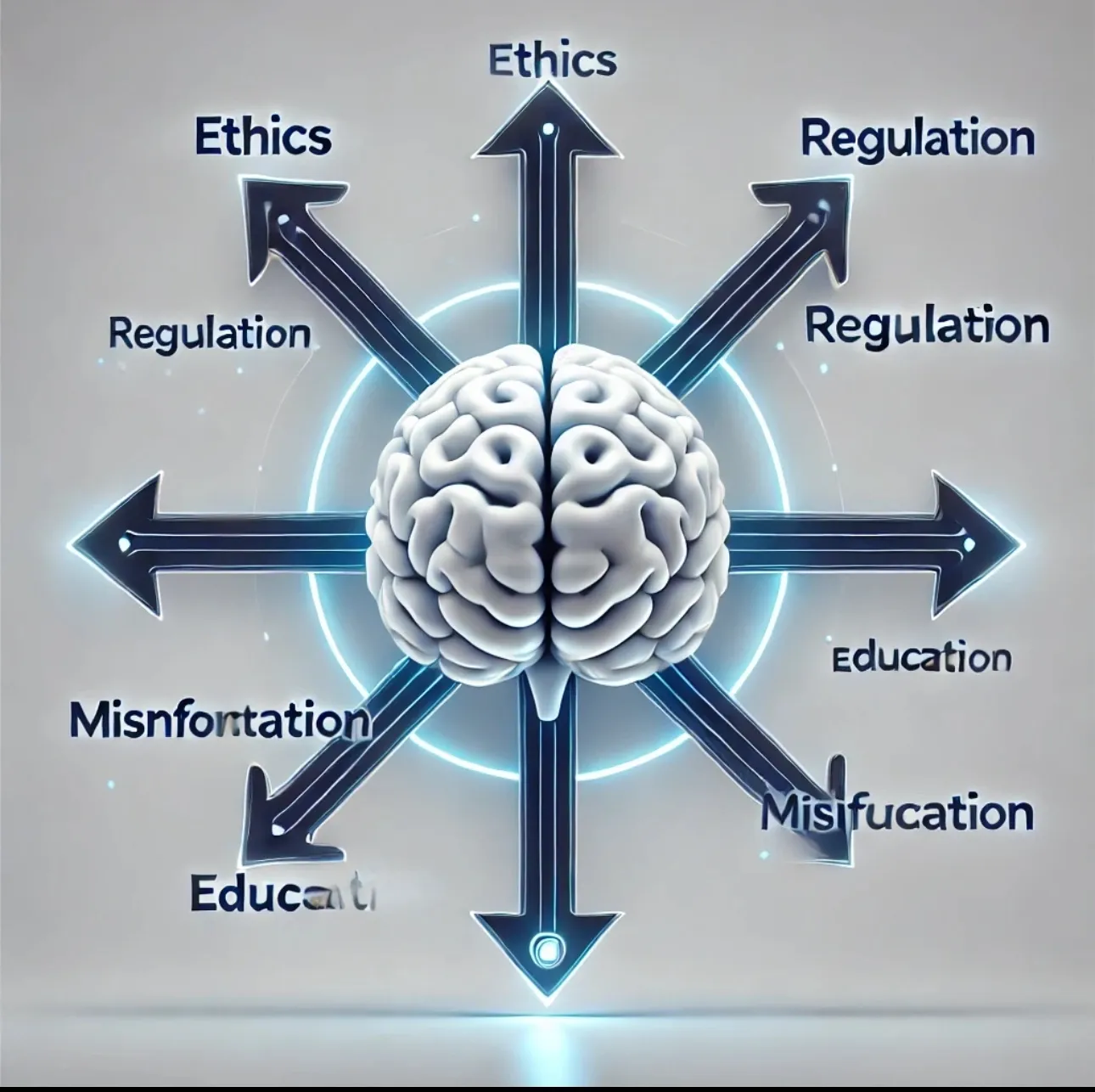
As we navigate these challenges, one thing is clear: the integration of AI into society must be guided by ethical principles, robust regulation, and a commitment to improving human well-being. By addressing these issues proactively, we can unlock the immense opportunities AI offers while mitigating its risks.
What are your thoughts on these challenges? Let’s start a conversation about how we can shape a responsible AI future.