The Importance of Teamwork and the Stages of Team Development
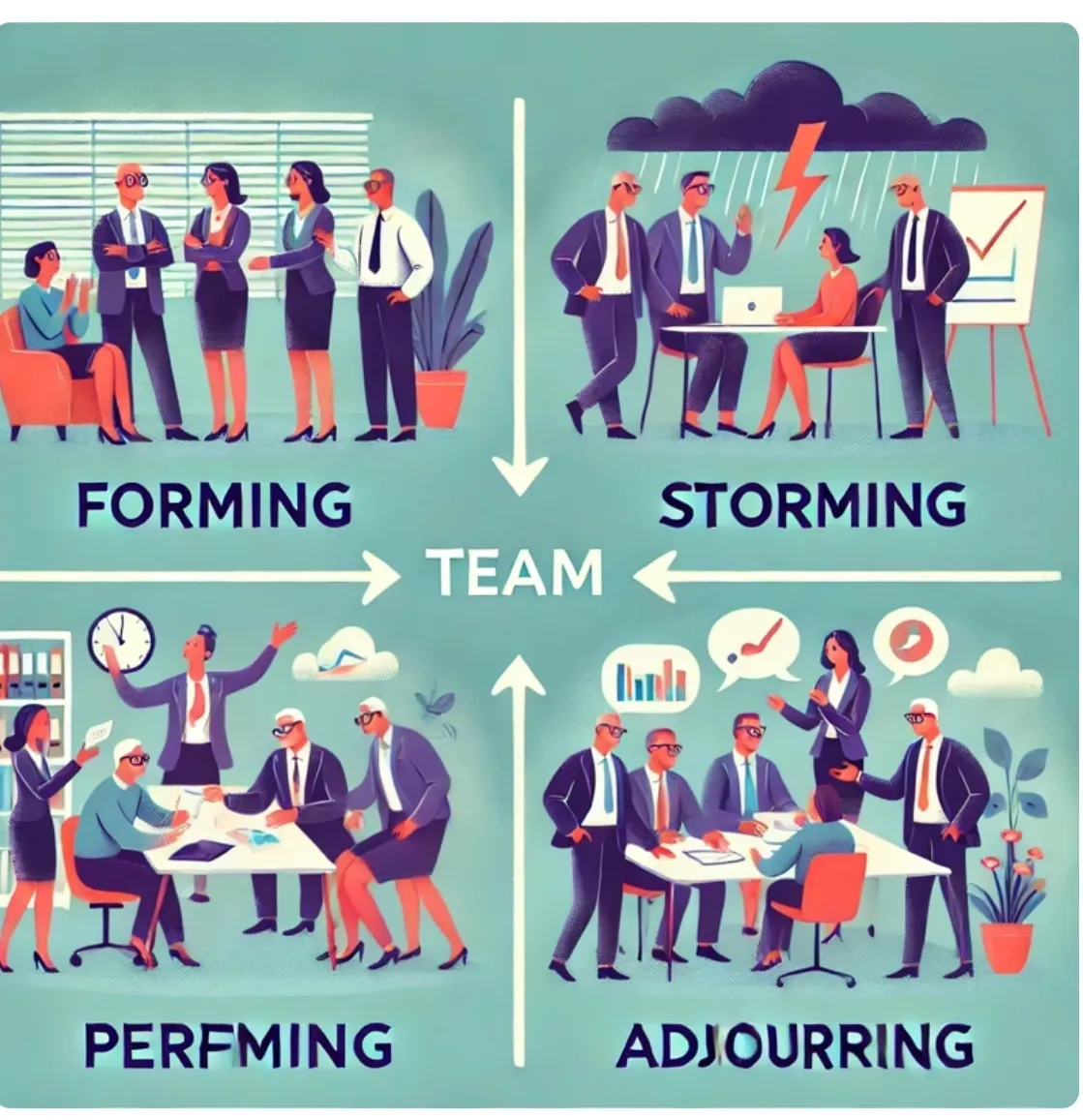
Teamwork is essential for achieving collective goals, fostering innovation, and enhancing productivity. It enables individuals to collaborate, share diverse perspectives, and leverage each other’s strengths to overcome challenges. Successful teamwork follows a structured development process, often described by Bruce Tuckman’s model of team formation. This model consists of five key stages: Forming, Storming, Norming, Performing, and Adjourning.
1. Forming
At this initial stage, team members come together, introduce themselves, and begin understanding their roles and responsibilities. There is often excitement, uncertainty, and a strong dependence on leadership for guidance. Communication is typically polite and cautious as individuals seek to establish trust and clarity.
2. Storming
As the team starts working together, conflicts may arise due to differing opinions, work styles, and expectations. This is a critical stage where individuals assert themselves, test boundaries, and sometimes experience frustration. Effective leadership and open communication are crucial to resolving conflicts and fostering a cooperative environment.
3. Norming
Once conflicts are addressed, the team begins to establish norms and develop a sense of cohesion. Roles become clearer, collaboration improves, and mutual respect strengthens. Team members start working more effectively together, and a sense of commitment to shared goals emerges.
4. Performing
At this stage, the team reaches peak productivity. Members work efficiently, trust each other, and focus on achieving objectives. Problem-solving becomes more autonomous, and the team operates with minimal supervision. A high-performing team can adapt to challenges and continuously improve its processes.
5. Adjourning (or Mourning)
As the project or task comes to an end, the team prepares for disbandment. This stage may involve reflecting on successes, recognizing contributions, and discussing lessons learned. Depending on the nature of the project, team members may feel a sense of accomplishment or sadness as they part ways.
Conclusion
Understanding and navigating these stages is key to building a strong, functional team. Effective leadership, clear communication, and adaptability help teams transition smoothly through each phase, ultimately leading to high performance and successful collaboration.